Keep Moving, Keep Living: A Smarter Way to Support Achy Knees
For many adults, knee pain does not arrive all at once. It begins quietly: stiffness in the morning, discomfort on stairs, hesitation when standing up, and a growing habit of avoiding movement. Yet modern guidance on osteoarthritis and chronic knee discomfort points in the opposite direction: appropriate movement is part of the solution, not the enemy.[1][2] Major clinical guidelines recommend therapeutic exercise as a core treatment for knee osteoarthritis, and they note that some discomfort at the beginning of exercise does not mean harm; with regular, tailored activity, people often gain less pain, better function, and a better quality of life.[1][2]
That matters because knee osteoarthritis is extremely common, especially with age. A large population-based analysis estimated a global prevalence of 22.9% among adults aged 40 and older.[5]
The goal is not to “push through” severe pain blindly. It is to stay active in a joint-friendly way. Public health guidance highlights low-impact options such as walking, cycling, tai chi, swimming, and water exercise, while also advising people to start slowly and build up gradually.[3][4] It is normal to notice some pain, stiffness, or swelling when beginning a new routine, but over time, regular activity can help joints feel and function better.[2][3]
For many people, the hardest part is consistency. When the knee feels unstable, sore, or “not trustworthy,” it becomes much easier to skip the walk, or sit longer than planned. That is where supportive tools may have a role. Current guidance does not suggest braces are necessary for everyone, but it does recognize that in selected cases, such as joint instability or abnormal loading, a brace or support may improve movement and function, especially when exercise alone is not enough.[1][2][6] The American College of Rheumatology/Arthritis Foundation guideline also recommends certain knee braces for specific knee OA patterns.[1]
Product Recommendation: Wellnee Knee Braces
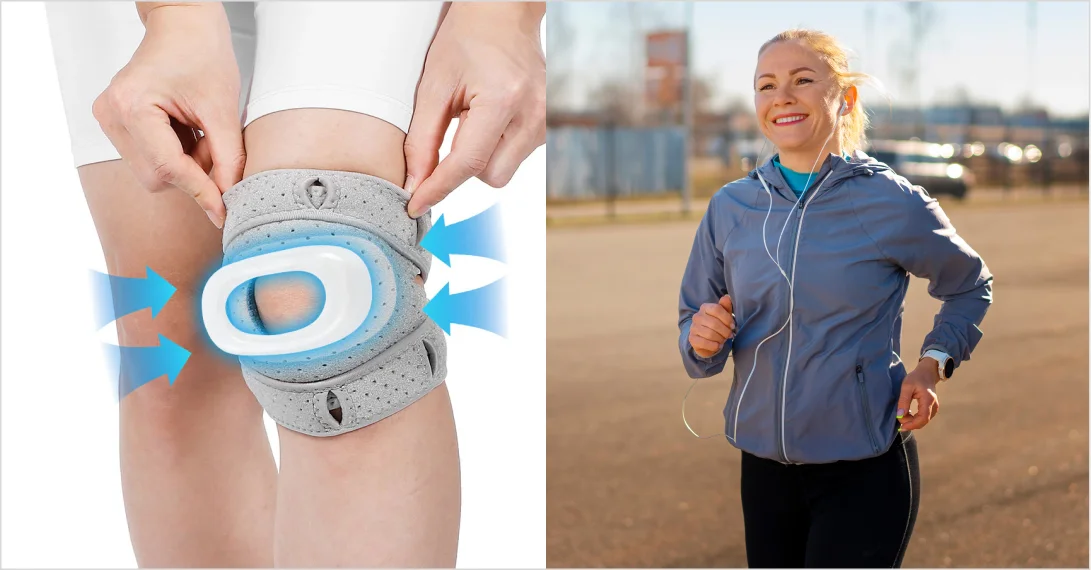
If your goal is to stay active more comfortably, Wellnee Knee Braces can be positioned as a practical everyday support-not a miracle cure, but a helpful companion for movement.
Why they may appeal to older adults:
- Gentle compression may help create a feeling of support around the knee during daily activity.
- A secure, flexible fit can make walking, standing, gardening, or climbing stairs feel more manageable.
- Lightweight daily wear makes them easier to use during normal routines rather than only during exercise.
- Confidence to keep moving is often the real benefit: when the knee feels supported, people may be more willing to remain active, and staying active is a cornerstone of knee-health guidance.[1][2][3]
Suggested soft-sell close
Wellnee Knee Braces are designed for people who want extra support while continuing the movements that matter: walking the dog, shopping, traveling, stretching, or simply getting through the day with more confidence. Used alongside sensible exercise, weight management when appropriate, and medical guidance when needed, a knee brace can be a simple step toward a more comfortable, more active life.[1][2][6][7]
References
[1] Kolasinski SL, Neogi T, Hochberg MC, et al. 2019 American College of Rheumatology/Arthritis Foundation Guideline for the Management of Osteoarthritis of the Hand, Hip, and Knee. Arthritis Rheumatol. 2020. URL: https://pubmed.ncbi.nlm.nih.gov/31908149/
[2] NICE. Osteoarthritis in over 16s: diagnosis and management. 2022. URL: https://www.nice.org.uk/guidance/ng226/chapter/Recommendations
[3] CDC. About Physical Activity and Arthritis. URL: https://www.cdc.gov/arthritis/prevention/index.html
[4] CDC. Osteoarthritis | Arthritis. URL: https://www.cdc.gov/arthritis/osteoarthritis/index.html
[5] Cui A, Li H, Wang D, et al. Global, regional prevalence, incidence and risk factors of knee osteoarthritis in population-based studies. EClinicalMedicine. 2020. URL: https://pubmed.ncbi.nlm.nih.gov/34505846/
[6] Gibbs AJ, Gray OM, Wallis JA, et al. Recommendations for the management of hip and knee osteoarthritis: A systematic review of clinical practice guidelines. Osteoarthritis Cartilage Open. 2023. URL: https://pubmed.ncbi.nlm.nih.gov/37394226/
[7] Holden MA, Metcalfe AJ, Dutton SJ, et al. Knee braces for knee osteoarthritis: A scoping review and narrative synthesis of interventions in randomised controlled trials. Osteoarthritis Cartilage. 2024. URL: https://pubmed.ncbi.nlm.nih.gov/39218202/